
Protect the Herd
Elk Collaring in Nebraska
In partnership with the University of Nebraska-Lincoln and the Nebraska Game and Parks Commission, this project investigates the spatial ecology, behavior, and population dynamics of elk across western Nebraska. The research aims to provide state managers with critical insights for effective harvest regulation, habitat management, and mitigation of agricultural conflicts.
The Guardian is here to help share the work that is already reshaping how Nebraska manages its growing elk population — offering the most detailed picture yet of where these animals roam, how they thrive, and what it will take to ensure their future on the prairie.
Elk Ecology Research in Nebraska
University of Nebraska-Lincoln
& Nebraska Game and Parks Commission


We are studying the spatial ecology, behavior, and population dynamics of elk across their current distribution in western Nebraska as part of a collaboration between the University of Nebraska-Lincoln and the Nebraska Game and Parks Commission. Specifically, we are investigating
- seasonal space use and movements (including migration),
- resource and habitat selection at multiple spatial scales relative to potential limiting factors of forage and risk from humans and predators,
- survival and cause-specific mortality of male and female elk, and
- density and abundance of elk in portions of Nebraska.
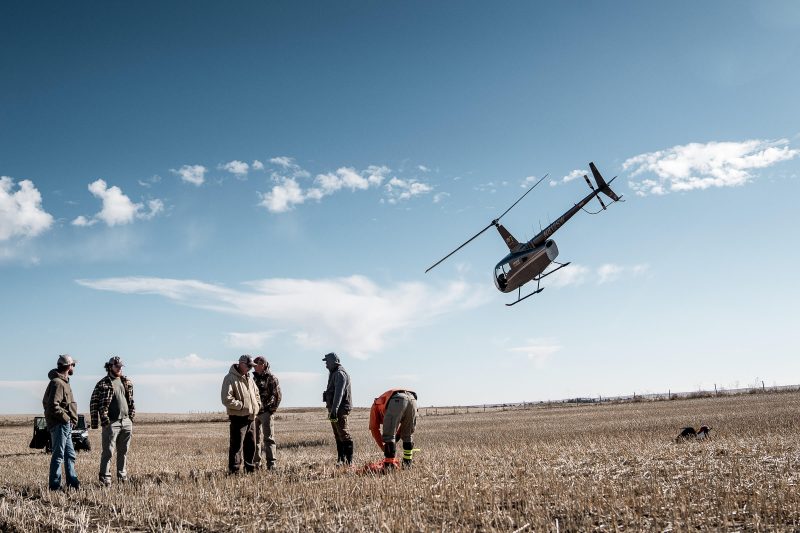
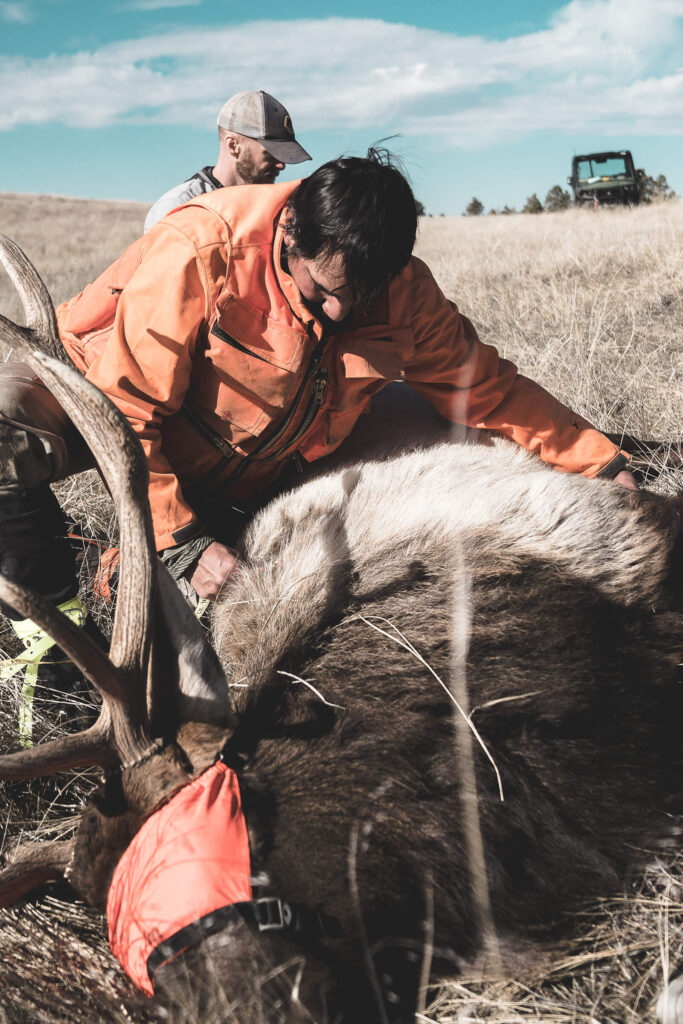
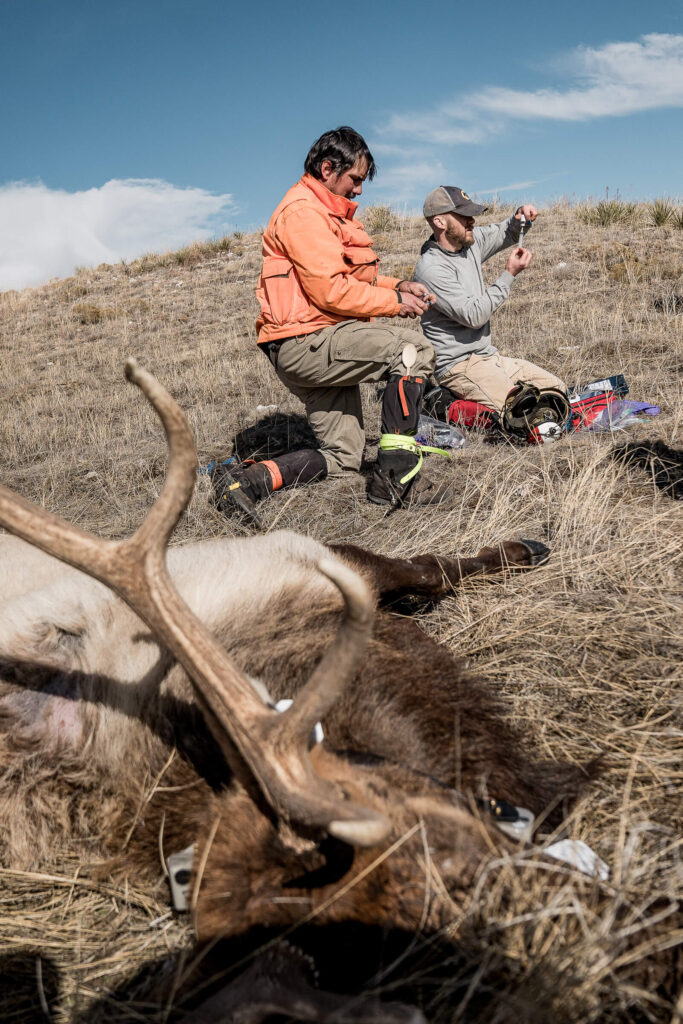
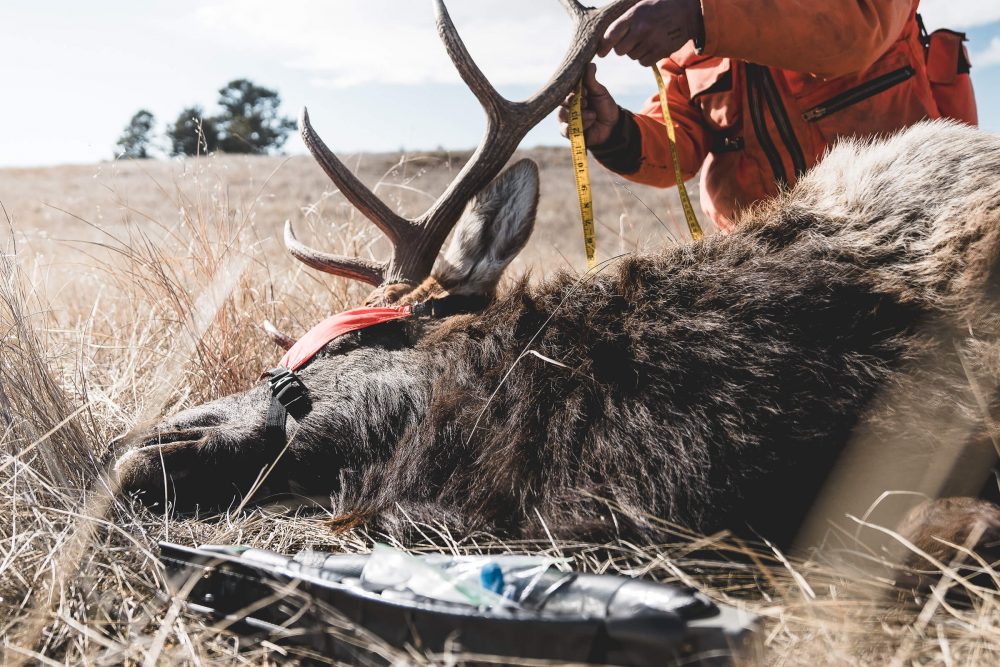
To conduct this research, we captured and GPS-collared 202 elk (133 females, 69 males) from 2022-2025 across much of western Nebraska including the Pine Ridge, the southern Panhandle, areas south of North Platte, the Sandhills, the McKelvie National Forest and surrounding areas, and north central Nebraska (see map).
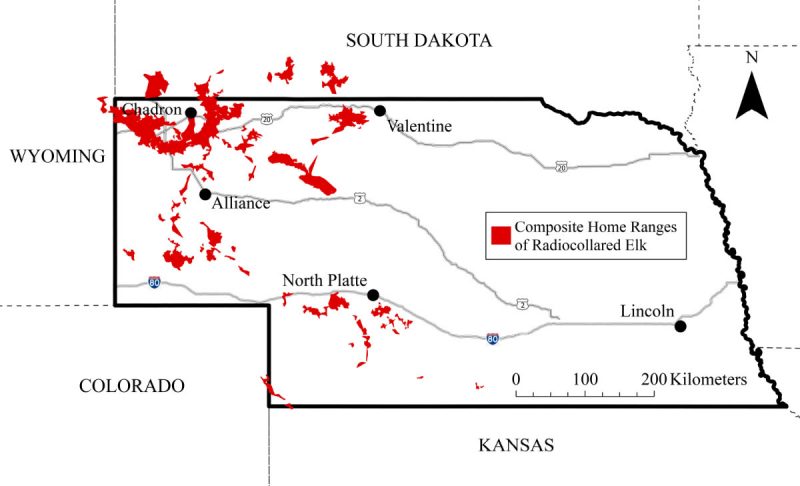
The elk have moved extensively within and outside of these areas including a few animals that have entered South Dakota, Wyoming, Colorado, and Kansas. We also deployed 233 trails cameras throughout the Pine Ridge escarpment to estimate density and abundance of elk.
Average home range size for elk was 67 km2 (range: 2 – 581 km2). Females had larger home ranges than males during winter (December – March), males had larger home ranges than females during calving (May – July), and home ranges did not differ between sexes in fall (September – November).
Elk in Nebraska are partially migratory meaning that some exhibit migration (i.e. occupy non-overlapping home ranges in different seasons) and some do not. About 25% of radiocollared elk migrated between distinct seasonal home ranges. Fifteen elk migrated >40km, including an elk that moved 90 km between seasonal ranges.
Annual survival of elk has been approximately 73% for females and 68% for males, with most of the mortality coming from harvest. Eighty-five % of the females we have captured were pregnant.
We are currently working on habitat selection models for elk across Nebraska using the telemetry data and density estimates for elk in the Pine Ridge using the camera data.
Our work will provide a comprehensive understanding of elk ecology in western Nebraska. This information will inform ongoing management of elk in Nebraska with respect to setting harvest regulations and mitigating crop depredation. Understanding seasonal movements of elk is helping to clarify which elk (seen by people and managers in different locations at different times) are in the same or different herds. Estimates of annual survival and mortality from harvest and other causes will allow managers to set harvest tag regulations with an understanding of population-level survival and rates of harvest.
Our resource selection analyses will provide finer scale understanding of landscape features that influence behavior of elk in Nebraska in space and time relative to factors that potentially limit their abundance. Furthermore, we plan to combine the survival and density estimates with existing hunter harvest information to build a model of elk population dynamics in the Pine Ridge. This model will be useful to evaluate population growth under a variety of hypothetical harvest management scenarios to inform ongoing management.
Our project represents a great opportunity that will allow us to go from knowing very little about elk in Nebraska to having a solid understanding of behavior, spatial ecology, and population dynamics across most of their distribution in the state.